The Bouncer at the Door: What Your Liver Actually Does With Every Capsule You Take
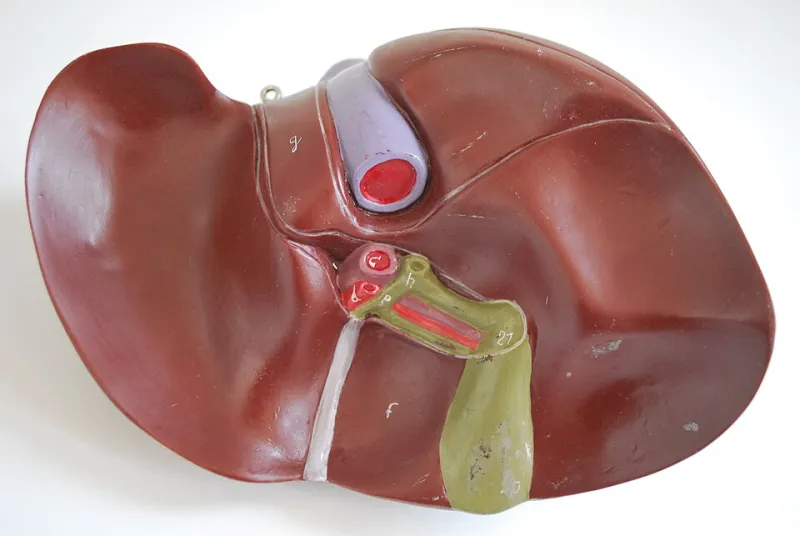
Photo: John Campbell, CC0, via Wikimedia Commons
Climbers talk about load weight the way accountants talk about debt — every pound matters, and the margin for error shrinks the higher you go. Your supplement stack works the same way. Each capsule, scoop, and tablet you take gets funneled through one organ that never gets a day off: the liver.
Most lifters treat the liver like a silent partner. It shows up in the fine print of every methylated compound warning label, then gets forgotten the moment the bottle is open. But if you're running a testosterone booster, a prohormone, a fat burner, and a pre-workout all at once, you're not just building muscle. You're building a queue.
The Liver Is the Bouncer, Not the Janitor
It's tempting to think of the liver as cleanup crew — something that sweeps up after the party. That undersells it. The liver is more like the bouncer at the door of your bloodstream. Everything absorbed through your gut gets escorted there first before it's allowed anywhere else in the body.
Oral compounds hit it hardest. That's by design — methylated prohormones and many oral anabolic-style compounds are structured specifically to survive that first pass through the liver, which is exactly what makes them harder on it. Even "milder" products add to the workload: herbal testosterone boosters with long ingredient lists, high-dose niacin, megadoses of vitamin A, even concentrated green tea extract have all been flagged in liver-toxicity case reports.
And it's not just supplements. Alcohol on the weekends, acetaminophen after heavy training days, a diet high in processed food — it all funnels through the same doorway. The bouncer doesn't care which line you came from.
What Hepatic Stress Actually Looks Like
The frustrating part about liver strain is how quiet it is early on. There are no nerve endings inside the liver, so it doesn't ache when it's struggling. What you might notice instead:
- Fatigue that sleep doesn't fix. Not overtraining tired — a flat, dull drain that sticks around.
- Appetite going sideways. Nausea or feeling full unusually fast can show up before anything else.
- Skin and eye changes. A yellowish tint in the whites of your eyes or persistent itching is a genuine red flag, not a maybe.
- Dark urine, pale stools. Classic signs that bile processing is off. Don't rationalize these away.
- Weird strength loss. When the liver struggles, protein metabolism and nutrient processing suffer, and your lifts feel off for reasons you can't name.
None of these are a diagnosis. All of them are a reason to get bloodwork. A basic panel — ALT, AST, bilirubin, alkaline phosphatase — costs less than a tub of pre-workout and tells you more than any internet forum ever will. If you're running anything oral and hormonal, baseline bloodwork before you start is non-negotiable. You can't know where you've drifted if you never marked the trailhead.
The Stack Audit: Three Questions Per Bottle
Lay everything out on the counter — every bottle, powder, and capsule. For each one, ask:
1. What is this doing that nothing else is? Overlap is the most common sin in supplement stacks. Three products with slightly different names but the same zinc, the same ashwagandha, the same tribulus base means you're tripling hepatic load for zero added benefit. Read the actual ingredient panels, not the marketing on the label.
2. What's the delivery route? Oral and methylated compounds carry the highest first-pass burden. Transdermal, injectable (under medical supervision), or plain dietary sources are gentler on the liver by default. If your stack is all-oral, that's where your risk concentrates.
3. What would happen if I cut it tomorrow? Be honest. If the answer is "nothing I'd notice," it's a candidate for removal. A lean stack of five well-chosen products beats a fifteen-bottle pharmacy of half-measures every time.
What Deserves to Stay
When you trim the stack down, the products that earn their place tend to be the same ones across every serious audit:
- Creatine monohydrate. Possibly the most-researched supplement in existence, no meaningful hepatic burden at standard doses, and it actually works.
- Vitamin D3 and magnesium. Both play real roles in testosterone production, and both are commonly deficient in American diets heavy on indoor living.
- A protein powder you actually use. Whey isn't hard on a healthy liver — but if you're chugging six scoops a day, real food can carry more of the load.
- One booster, not four. Pick the one with clinical doses of ingredients that have actual human studies behind them. Run it, log it, get bloodwork, reassess.
The Altitude Lesson
On Everest, the deadliest mistake isn't a storm — it's carrying too much weight too high, too fast. Climbers who ignore load limits don't fail dramatically; they fade quietly, a little slower each day, until they can't make decisions at all.
Your liver fails the same way. It doesn't announce itself. It just quietly absorbs everything you throw at it — until one day it can't. Audit the stack, get the bloodwork, cut the redundancy, and give the hardest-working organ in your body the same respect you give your training split. The summit doesn't go anywhere. Neither does your ability to climb it next season — if you don't burn the engine out getting there.
This article is for informational purposes only and isn't medical advice. Talk to a physician and get baseline labs before starting or changing any supplement regimen, especially anything hormonal.