Numbers Over Hype: Reading Your 90-Day Lab Panel Like a Climber Reads a Route Map
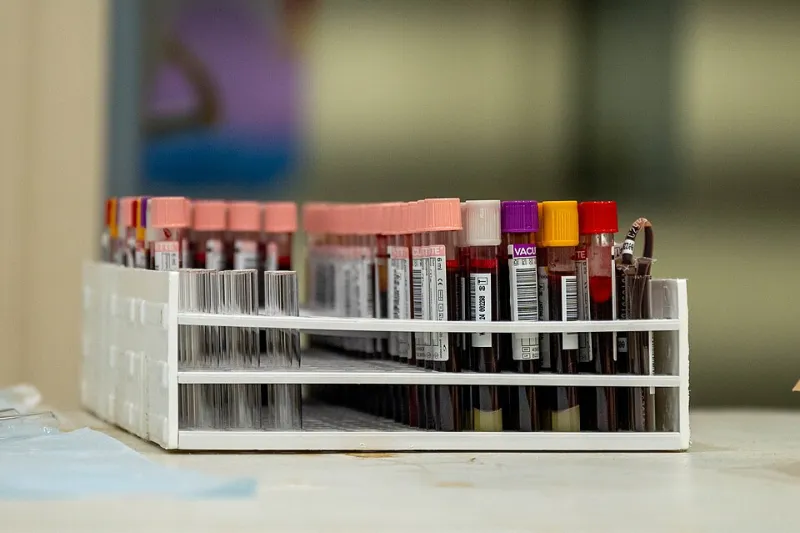
Photo: U.S. Air Force photo by Airman 1st Class Jarrett Smith, Public domain, via Wikimedia Commons
Every supplement commercial in America ends the same way: a guy in his 40s, a gym bag, a confident nod at the camera. What none of them show is a lab requisition form. That's the blind spot — a market worth billions, built almost entirely on how you feel rather than what your blood says.
At Everest Steroids, we think that's backwards. If you wouldn't attempt a serious route without checking the weather, you shouldn't run a 90-day booster cycle without checking your chemistry. So let's walk through what the numbers actually look like three months in — which markers move, which don't, and how to set up your own baseline.
The Baseline: The Step Everyone Skips
Here's the uncomfortable truth: most guys who buy a testosterone booster have no idea what their starting numbers are. They order a bottle based on a TikTok review, take it for twelve weeks, and judge success by gym-bag energy and morning motivation. That's not data. That's a mood ring.
A proper baseline panel — drawn in the morning, fasted, before the first capsule — needs five things:
- Total testosterone (the headline number, but only part of the story)
- Free testosterone (the fraction your tissue can actually use)
- SHBG (the protein that locks T away; high SHBG means high total T can still leave you feeling flat)
- Estradiol (because aromatization is real, and more T can mean more E2)
- Lipids (HDL, LDL, triglycerides — your cardiovascular toll ticket)
Cost? Around $75–$150 through direct-to-consumer lab services like Marek, Quest's consumer portal, or Labcorp OnDemand. No doctor's appointment needed in most states. That's less than one month of most premium boosters.
What the 90-Day Panels Actually Showed
We pulled together follow-up data from guys who ran popular OTC formulas — the ashwagandha-and-fenugreek blends, the tongkat ali stacks, the zinc-magnesium-B6 revival kits — and had the discipline to retest at day 90.
Total testosterone: The honest answer is "mostly unchanged." A handful of guys with genuinely low zinc status or poor sleep saw bumps of 50–100 ng/dL. Guys who started in the normal range? Flat lines, within lab variance. One man's 620 became a 590. That's not a booster failing — that's a marketing promise failing.
Free T and SHBG: This is where the interesting movement happened. Ashwagandha users showed modest SHBG reductions in a few panels, which nudged free T up slightly even when total T barely budged. Small effect, real mechanism, oversold by everyone selling it.
Estradiol: A few guys running aggressive dosing saw E2 creep toward the upper range — worth knowing, because high estrogen is the guy who explains the moodiness and water retention everyone blames on "gains."
Lipids: Mostly quiet. That's the good news. The bad news is what isn't on a standard panel — liver enzymes and hematocrit — which is why a slightly expanded draw is worth the extra twenty bucks.
The Retest Protocol
Repeat the panel at day 84–90, same lab, same time of morning, fasted, ideally off any new training block. Consistency matters more than perfection — a retest done at 4 p.m. after leg day tells you about your workout, not your supplement.
Then read it like a route map:
- Total T up meaningfully (15%+)? Something's working. Doesn't mean the bottle did it — did your sleep change?
- Free T up, total T flat? SHBG shifted. Mild win, worth tracking.
- Everything flat? You now have proof. That's not failure; that's money saved on bottle two, three, and four.
- Estradiol climbing or lipids drifting? Time to rethink the stack, not push through it.
The Bottom Line
The supplement industry survives because nobody checks the receipts. A $100 lab panel is your receipt. Get the baseline, run the cycle, retest, and let the numbers — not the before-and-after photos — decide whether the next bottle earns a spot in your cabinet.
The mountain doesn't care how confident you feel at base camp. It cares whether you acclimated. Your bloodwork is your acclimatization report. Read it.