Packing Too Heavy: What Your Supplement Stack Costs You Above Base Camp
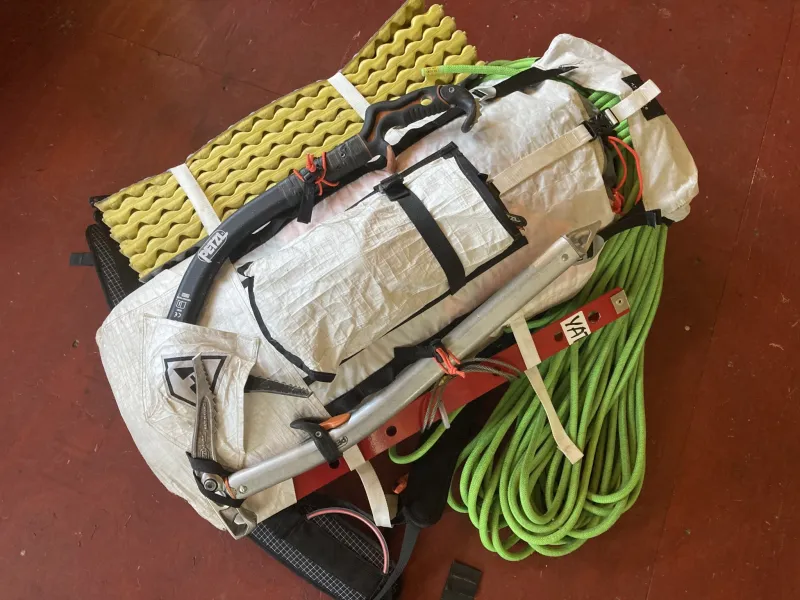
Photo: overloaded hiking backpack mountaineering gear, via d1nymbkeomeoqg.cloudfront.net
Every Everest climber knows the same brutal math. Every pound in the pack slows the climb, burns oxygen, and increases the odds you turn back before the summit. The best mountaineers aren't the ones carrying the most gear — they're the ones ruthless about what stays home.
Your supplement drawer works the same way. And if you're like most guys walking into a commercial gym in America right now, your pack is way overweight: a pre-workout scooped into a shaker, creatine in the morning, a testosterone booster with breakfast, maybe a fat burner before cardio, a nootropic for the workday, and a sleep stack to close it out. Six products, dozens of ingredients, all hitting your system at once.
Nobody ever audited that stack. That's the problem.
The Overweight Pack Problem
Individually, most of these products seem harmless. Stack them and you get what I call the altitude sickness effect — the cumulative load of carrying too much above base camp, where every system in your body is already working harder.
Here's what the overlap actually looks like:
Stimulant stacking. Your pre-workout has 300mg of caffeine. Your fat burner has another 200mg. Your nootropic? Probably more caffeine, maybe with theacrine or dynamine layered on top. You could be pushing 600-700mg of stimulants a day — and chronically jacked cortisol is one of the fastest ways to drag your testosterone down. You're literally buying a T-booster to fix a problem your other supplements are causing.
Hormone-modulating overlap. Ashwagandha shows up in your T-booster, your sleep stack, and your pre-workout's 'stress complex.' ZMA-style zinc and magnesium appear in three bottles. Tongkat ali might be in two of them. You have no idea what your actual daily dose is, because nobody reads four labels and adds them up.
The liver's queue. Every capsule runs through the same metabolic checkpoint. A pile of botanicals, stimulants, and additives at once doesn't mean any single ingredient is dangerous — it means you can't tell which one is doing what, good or bad.
Why Stacks Happen (And Why They're Hard to Quit)
The supplement industry is built like a gear shop at the trailhead: every clerk convinces you that you need one more piece of equipment. Pre-workout companies sell you the pump. T-booster companies sell you the drive. Sleep companies sell you the recovery. Nobody mentions that the products interact, because nobody's job is to look at the whole pack.
There's also a psychological trap. Once you've spent $250 a month on supplements, cutting one feels like admitting the others were overhyped too. So the stack grows, and the stack never gets audited.
The Base Camp Audit: A Five-Question Framework
Before your next order, lay every bottle on the kitchen table and run each one through these questions. If it fails, it goes back in the closet — or in the trash.
1. What is this replacing? Sleep, protein intake, and progressive training are the base camp of hormone health. A supplement should supplement something, not substitute for it. If a bottle is there to paper over five hours of sleep, fix the sleep first.
2. What does it overlap with? Write down the active ingredients in every product and look for doubles. Caffeine, ashwagandha, zinc, magnesium, and green tea extract are the usual suspects. Consolidate — one product at the right dose beats three at unknown ones.
3. Can I feel or measure the difference? Stop the product for three weeks. If nothing changes — in the gym, in the mirror, on a lab panel — it was ballast. This is the single most effective move in the whole audit, and almost nobody does it.
4. Is it pulling in the same direction as everything else? A fat burner loaded with stimulants and a T-booster built around stress reduction are working against each other. Pick the goal that matters this quarter and make the pack match it.
5. Would I buy this today, knowing what I know now? Not 'did it work once' — would you, right now, spend fresh money on it? Sentimental gear weighs the most.
What a Lean Pack Looks Like
For most healthy, training-hard guys, the honest core is short: creatine monohydrate, vitamin D if you're deficient, enough protein, and — if labs and a real sleep fix support it — a single, transparently-dosed testosterone support product. That's it. A climber with a 30-pound pack summits; a guy with a 70-pound pack becomes a cautionary tale.
The paradox of the modern stack is that the more you carry, the less each item can do. Lighten the load, and you might be surprised how fast you start moving again.